For some people in Cape Town's prisons, the only thing standing between them and their families is R1,000 or less. A court has granted them bail. They simply cannot pay it.
On Friday, 20 November, the South African Bail Fund (SABF) officially launched in Cape Town to change that. Since a pilot began in May at Pollsmoor and Goodwood prisons, the fund has paid bail for 330 remand detainees, people held while they wait for their cases to be heard.
"No one should be behind bars because they cannot afford bail," said SABF director Jody-Lee Fredericks.
Granted bail, but still inside
Remand detainees have not been convicted of anything. The fund focuses on people whose bail has been set at R1,000 or less but who have no way of raising the money.
"There is a critical difference between being granted bail and actually being able to afford and secure one's release," said Sambeso Sani of the Judicial Inspectorate for Correctional Services (JICS), the independent body that oversees prisons. "Justice must be accessible to all, regardless of a person's financial circumstances."
Fredericks said about a third of the detainees the fund has helped were charged with drug possession. "They are being sent to prison for an addiction issue," she said.
Chad, a 33-year-old from Belhar who was helped by the fund, put it simply: "It means more than what I can explain."
Crowded cells
A parliamentary reply in March 2026 put Western Cape prisons at 70% overcrowding. According to that reply, Pollsmoor Remand Detention Facility A was at 308% of capacity, Pollsmoor Female Correctional Centre at 295%, Goodwood Remand Detention Facility at 170% and Pollsmoor Remand Detention Facility B at 127%.
Government figures put the cost of keeping one person in prison at about R463 a day.
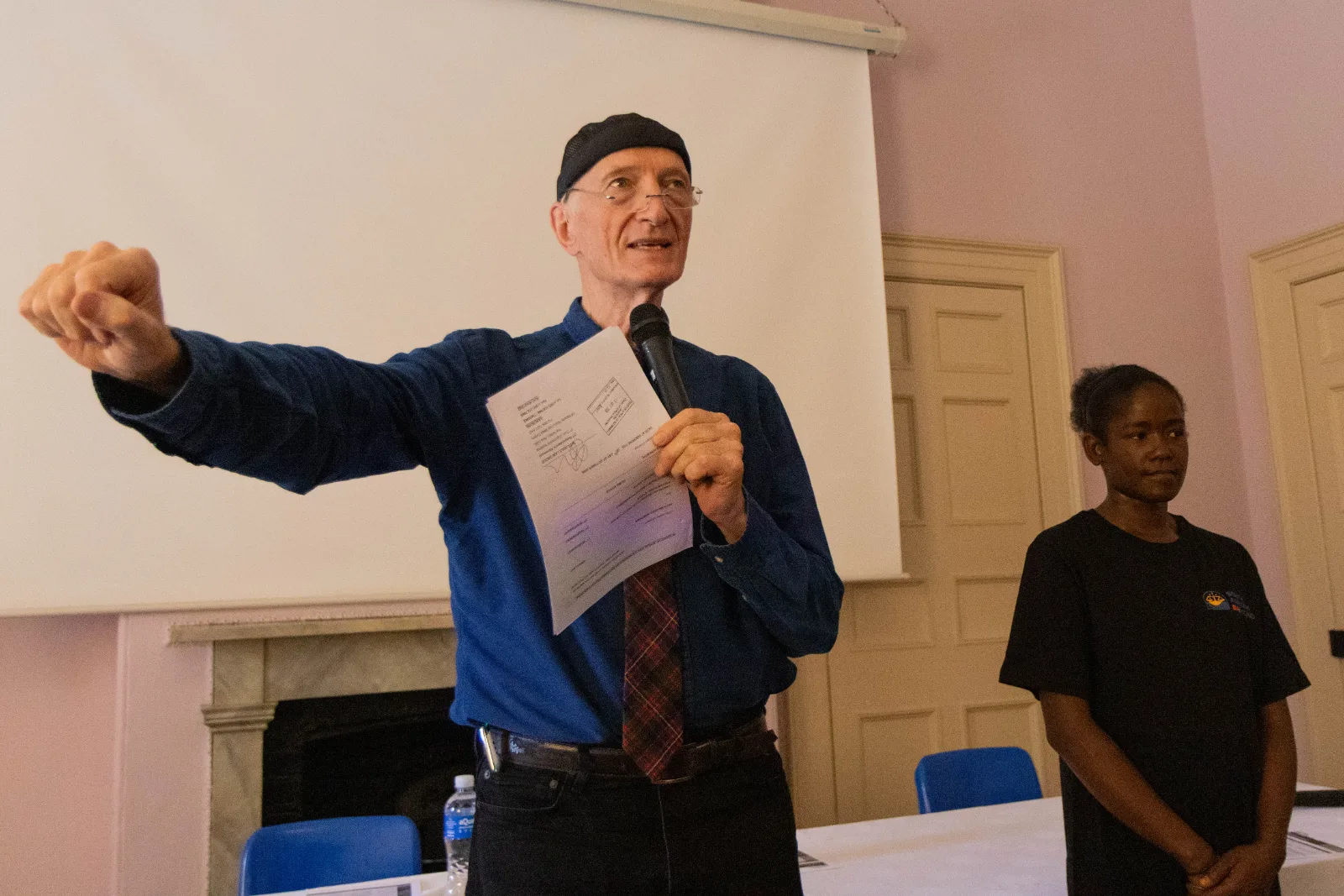
The pilot was initiated by retired judge Edwin Cameron, a former Constitutional Court justice and former inspecting judge of prisons. He was modest about what it can do: "The Bail Fund is a small intervention … It's not a grand repair."
More than a payment
The fund also supports some former detainees through their ongoing court cases and helps them look for work. It is donor-funded, with the Millennium Trust as its main funder and support from the Claude Leon Foundation and the Bertha Foundation.
The launch was attended by Correctional Services Minister Pieter Groenewald, department officials, members of Parliament's Portfolio Committee on Correctional Services, University of Cape Town law students and former remand detainees.
For a household living on a grant or a casual wage, R1,000 can be out of reach, and a breadwinner in a cell can mean a lost job or missed rent. That is the gap the fund is trying to close.
What we do not yet know
- Whether the fund plans to expand beyond Pollsmoor and Goodwood, or to other provinces.
- How people in need of help, or their families, can apply.
- Whether the Department of Correctional Services will respond with its own measures on remand overcrowding.