When Nomphelo Dumke joined Intlantsi, she was unemployed and had no background in the arts. Today she is training to be the HR manager of a project that uses painting, drama, music and storytelling to help children in Peddie, in the Eastern Cape, feel safe enough to learn.
"I never thought I could stand in front of a classroom and support children," she said.
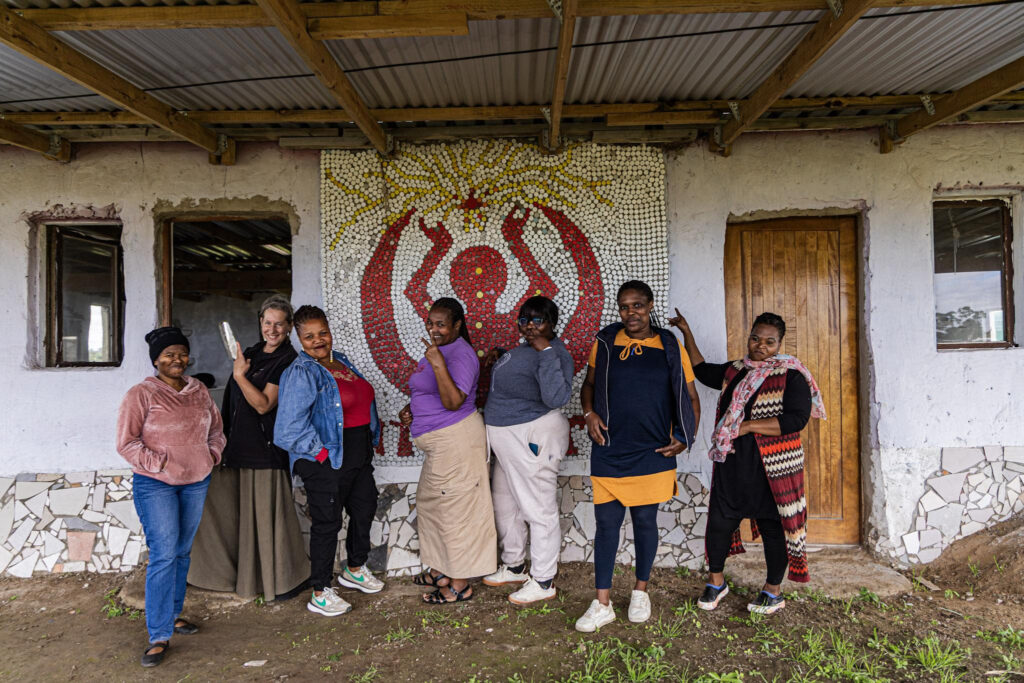
Dumke is one of a group of local women who now run Intlantsi Creative Development Project, a non-profit that works in seven schools in Peddie.
From trainees to managers
Intlantsi was founded by Merran Roy, a fine arts graduate and UK-trained art psychotherapist, who felt that formal arts therapy was too expensive and out of reach for most South Africans. Instead, she trained unemployed community members as facilitators. The work began as a pilot at Keiskamma Trust centres from 2011, and Intlantsi was registered as a non-profit in 2015.
From 2025, Roy gave every facilitator a management role. Zoleka Mabuyane is the centre manager, Sinovuyo Ngcolomba the finance officer, Bulelwa Ngesi the child protection officer and Nondumiso Mfabana the administrator.
The handover is showing results. This year Dumke handled disciplinary processes on her own, and Ngcolomba, who had no finance experience, ran payroll by herself for the first time. Ngcolomba says one of her greatest satisfactions is when former trainees come back years later to thank her.
"The team is just doing things without first asking for permission," Roy said of their growing independence. Roy is now stepping back to focus on research.
Safety first, then learning
The approach starts with a simple idea. "Children need to feel safe, and they can't suffer fear," Roy said.
In one case shared by the team, a boy who had been held back several grades and was known as a bully was given a calm, non-judgemental space by a facilitator. He began to engage, and his marks improved after that.
The work has reached adults too. In a 2025 music-based wellness project with Rhodes University PhD student Tshegofatso Makube, facilitators at Fezeka Primary built instruments, work that helped teachers look at the stress behind corporal punishment. In Makhanda, parents began to see how their own stress affects their children.
Running on very little
The facilitators built their centre themselves in 2017, and it still needs a fence and a wall. Their donated laptops are five years old, they buy WiFi only when they need it, and they travel between schools to reach learners. The Solon Foundation South Africa and The Learning Trust cover core costs.
With more funding, the team hopes to run workshops for pregnant women, single parents, and people affected by substance abuse and gender-based violence.
For rural towns where counsellors and psychologists are scarce, Intlantsi offers a model worth noticing: train local people, trust them, and let them lead.