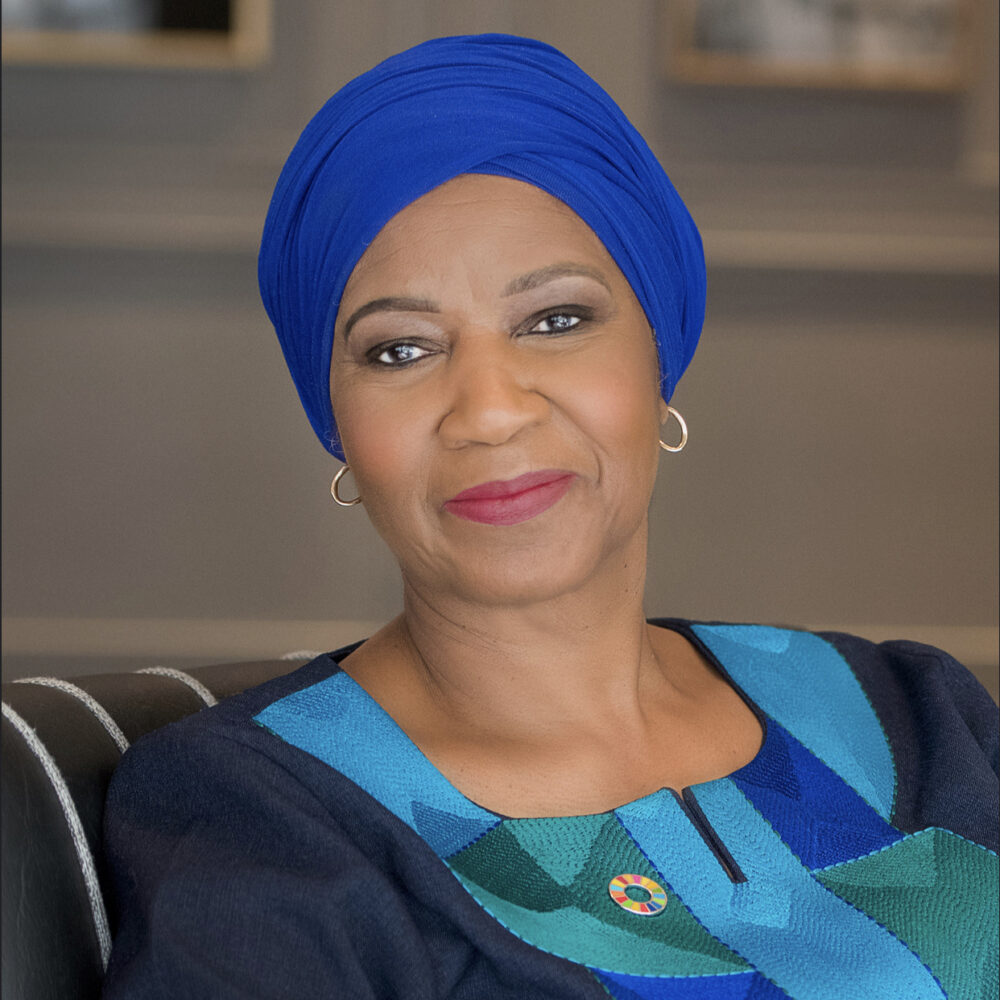
Long before the world knew her name, Phumzile Mlambo-Ngcuka stood in front of a classroom in KwaZulu-Natal. The young teacher from Clermont would go on to become the first woman to serve as Deputy President of South Africa, and later lead the United Nations' agency for women. In many ways, she never stopped teaching.
Mlambo-Ngcuka has died at the age of 71. The Presidency confirmed her death on Friday night, 20 November. Acting President Paul Mashatile received the news with "shock and sadness" and conveyed condolences to the family on behalf of President Cyril Ramaphosa, who is in the United States, the government and the people of South Africa.
The Presidency said the family "has asked for privacy at this time", while deeply appreciating the messages of support from South Africans and the global community. Further details will be shared after consultation with the family.
From a Clermont classroom to the world
Phumzile Mlambo-Ngcuka was born on 3 November 1955 in Clermont, near Durban. She studied social science and education at the National University of Lesotho and taught in KwaZulu-Natal in the early 1980s.
It was in those years, said United Nations Secretary-General António Guterres, that her lifelong fight took shape. As a young teacher and anti-apartheid activist, he said, she learned that freedom is incomplete until it reaches every woman and girl.
In 1984 she went to Geneva to work with the World YWCA as its youth director, where she founded a programme for young women around the world. She came home to help build a new country, and in 1994 she took her seat in South Africa's first democratic Parliament.
Her love of learning never left her. She later earned a master's degree from the University of Cape Town and, in 2013, a doctorate from the University of Warwick in the United Kingdom. Her research looked at how mobile technology could support teachers in poor communities.
A life of firsts
Mlambo-Ngcuka served as Deputy Minister of Trade and Industry from 1996, and as Minister of Minerals and Energy from 1999 to 2005, a period in which mining rights were opened up to South Africans who had been shut out under apartheid.
In June 2005, President Thabo Mbeki appointed her Deputy President. No woman had held the office before. In that role she led the Accelerated and Shared Growth Initiative for South Africa (AsgiSA), a plan aimed at cutting poverty and unemployment. She stepped down in September 2008, along with much of the Cabinet, after Mbeki resigned.
In 2013 she was appointed Executive Director of UN Women and an Under-Secretary-General of the United Nations, serving two terms until 2021. She helped launch the HeForShe campaign, which invited men and boys to stand up for gender equality, and the Generation Equality effort, which mobilised about 40 billion US dollars in commitments for women and girls. She also founded the Umlambo Foundation and served as Chancellor of the University of Johannesburg.
She is survived by her husband, Bulelani Ngcuka, former head of the National Prosecuting Authority, and their five children.
"Lifting as you climb"
For many South African women, her greatest gift was not a title but an example. She believed in bringing others up with her, and once put it simply: "Lifting as you climb has to be your mantra."
President Ramaphosa said: "For many, Mlambo-Ngcuka's legacy will not only be measured by the offices she held". It would also be seen, he said, in the doors she opened for the generations of women who followed.
Guterres called her "a lifelong champion of the rights and empowerment of women and girls", recalling her conviction that "gender equality is not a favour to be granted but a right to be claimed."
UN Women said she devoted her life to justice and equality. "Her courage inspired people around the world," the agency said.
The ANC described her as "a distinguished leader of our movement and a dedicated servant of the people". Its secretary-general, Fikile Mbalula, said the movement had lost "a mother, a leader, a confidant", one of a rare class who put "her country first and service foremost".
A legacy in every girl who dares
Today, women serve as ministers, premiers, judges and chief executives in South Africa in numbers that were unimaginable when Mlambo-Ngcuka first stood at a chalkboard in Clermont. Not all of that is her doing, but she was among those who walked the path first, and then turned back to hold the door open.
On Monday, somewhere in KwaZulu-Natal, a girl will walk into a classroom much like the one where a young teacher once stood. Phumzile Mlambo-Ngcuka spent her life making sure that girl's dreams would have no ceiling.
Hamba kahle, Mama Phumzile.
What we do not yet know
- Where and when exactly she died. The Presidency and the family have not shared these details, and no cause of death has been given.
- Funeral and memorial arrangements, which will be announced after consultation with the family.