Opinion
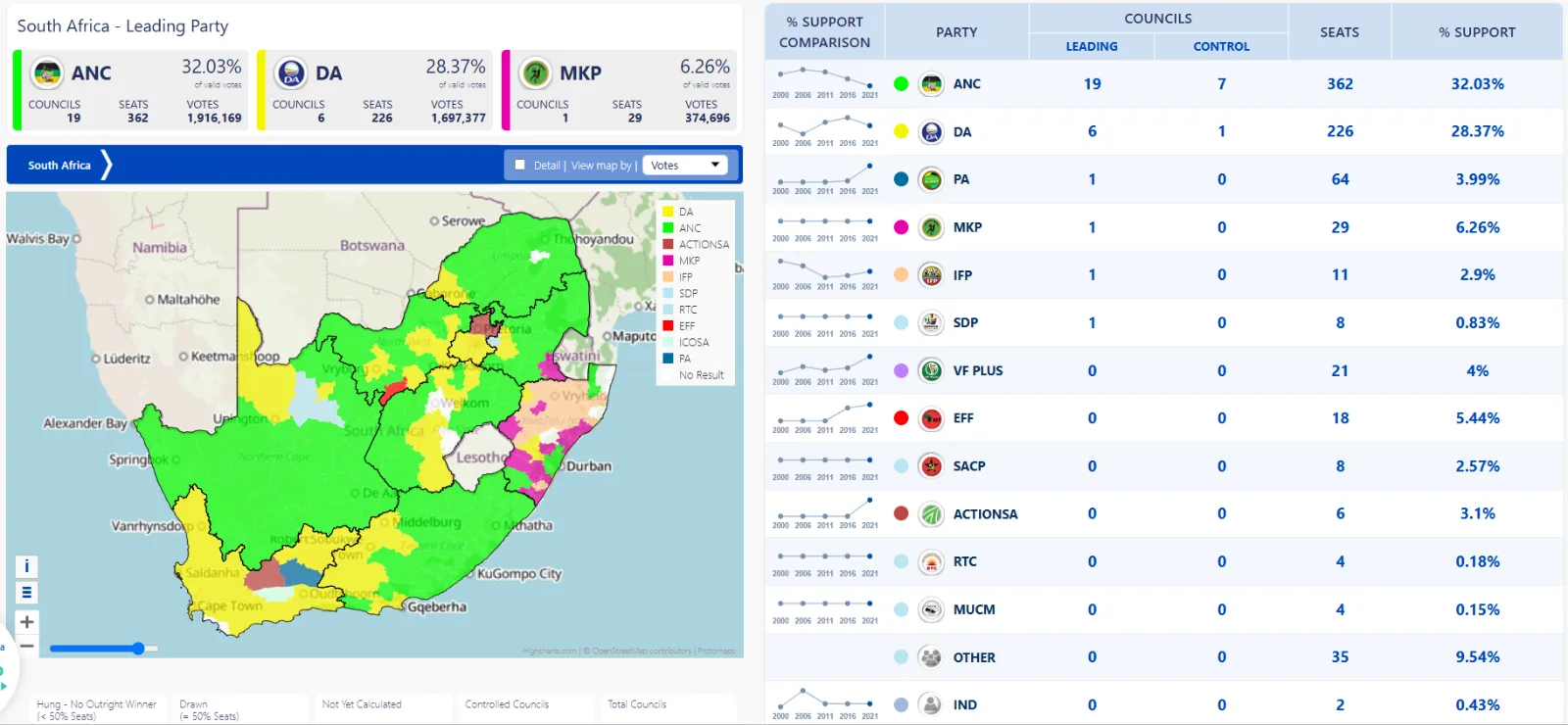
Early IEC figures, incomplete as they are, already carry a message: no single party looks set to hold every big city outright. About a tenth of districts were counted in Johannesburg and Tshwane at mid-morning on Thursday, and the DA led the first while ActionSA led the second, with the ANC close behind in Tshwane.
What the numbers say, and what they do not
In the IEC figures at about 9:42am, the DA had 40.33% in Johannesburg. In Tshwane, ActionSA had 29.01% to the ANC's 28.08%. Nationally, with 23% of districts counted, the ANC stood on 31.68% and the DA on 29.68%. Shares will move as outstanding districts report, and a lead of under a point is not a result.
Even so, a pattern of close contests in the largest councils points to one likely outcome: negotiation. IEC Chief Electoral Officer Sy Mamabolo has said that declaring final results by the weekend would give municipalities the certainty to arrange first council meetings and give parties time to negotiate coalitions.
Why the deals matter more than the count
Voters usually judge a council on whether water runs, lights stay on and refuse is collected. Municipal finances are tied closely to those basics: our earlier reporting put what municipalities owe Eskom at R122.5 billion. A hung council that cannot pass a budget or appoint a mayor puts that service delivery at risk.
That is the test I would apply to whatever arrangements emerge. Are the terms public? Is there a clear timetable for electing a mayor and passing a budget? Does the agreement say what happens when partners disagree?
What voters can reasonably ask for
- Published coalition terms, so residents can see what was agreed and who is accountable.
- Quick decisions on mayors and budgets, so councils are not left drifting.
- Clear service-delivery commitments that can be checked against results.
The count is not finished, and this column may need revising once it is. But the argument holds regardless of who finally leads: the real contest begins when the counting stops.