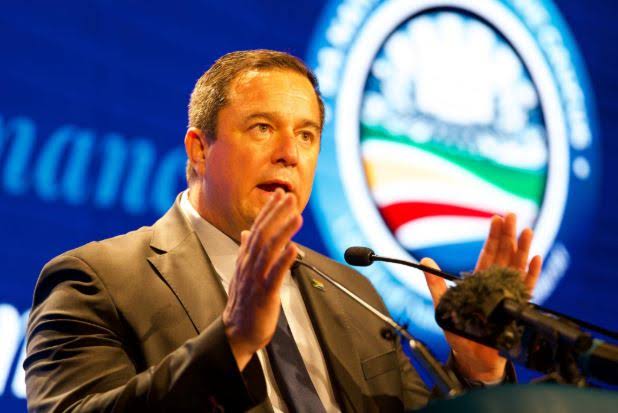
South Africa has not lost access to the United States market with its exit from the African Growth and Opportunity Act (AGOA), Deputy Minister of Trade, Industry and Competition John Steenhuisen told Parliament on Wednesday, adding that the loss of AGOA amounts to "around a 3% increase in tariffs" in many cases.
Steenhuisen was answering a question from IFP MP Thokozani Langa in a National Assembly plenary, standing in for Trade, Industry and Competition Minister Parks Tau. South Africa is due to exit AGOA in January.
What changes for exporters
"A lot of people are under the misconception that we have lost access to the US market. That is not the case," Steenhuisen said. South Africa keeps most-favoured-nation (MFN) status with the United States, he said, and many sectors can remain competitive at the higher tariff.
He said that since US President Donald Trump introduced tariffs on various countries this year, many American consumers have been absorbing the cost of South African imports. He cited BMW X3 vehicles being diverted to Canada and other markets, along with other products.
What the dtic says it is doing
- Market diversification: measures to keep exports competitive and reduce dependence on any single market, using the African Continental Free Trade Agreement, the SADC Trade Protocol, the SADC-EU and SADC-UK Economic Partnership Agreements, the SACU Preferential Trade Agreement and China's zero-tariff treatment policy.
- Europe: negotiations on safeguards for automotive exports, particularly hybrid and electric vehicles, have concluded, and an interim arrangement has been made for safeguards on steel exports.
- New access: secured for avocados, grapes and apples.
- Exporter support: development programmes for the exporters most affected by the AGOA exit, plus work on trade barriers, export standards and traceability.
Steenhuisen said exporters have met the department to look for new markets and address trade barriers, especially in agriculture.
What we do not yet know
- The value or volume of exports affected by the AGOA exit; no figures were given in the reply.
- Which sectors face a tariff increase larger or smaller than the 3% he described, since he said "in many cases".
- The exact January date on which the exit takes effect.