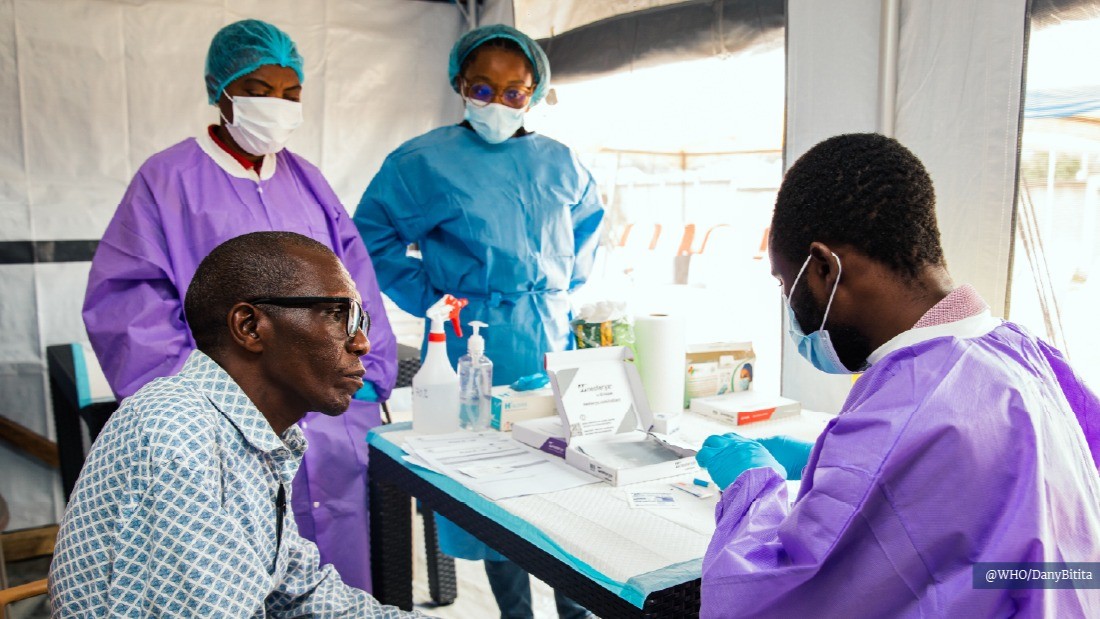
A Phase 2/3 trial of candidate vaccines against Bundibugyo Ebola began on 23 October in Bunia, in the Democratic Republic of Congo, with the first participants enrolled, the World Health Organization (WHO) said in an outbreak notice published that day.
The notice says no approved vaccine or specific treatment exists for the disease. Data in it run to 20 October unless stated, so figures below may since have changed.
The outbreak in numbers
WHO reports 9,704 confirmed cases in the DRC as of 20 October, including 4,687 deaths and 2,595 recoveries, across 66 health zones in eight provinces. Since its previous notice on 8 October, it counted 976 new confirmed cases and 482 confirmed deaths. Ituri province accounts for 7,040 cases and 3,271 deaths; Nord-Kivu for 2,146 cases and 1,199 deaths.
WHO calls it the largest Ebola outbreak ever recorded in the DRC, irrespective of virus species, and the second documented Bundibugyo outbreak in the country after 2012. The outbreak was declared on 15 May 2026.
Contact tracing is behind target: of 30,130 contacts under follow-up, 79.7 per cent were seen on 20 October against a required 95 per cent. WHO rates the national risk "very high" and advises against restricting travel to, or trade with, affected countries.
Kenya and Nigeria
Kenya has nine confirmed cases, including one death, as of 20 October, WHO says. The first case was an adult man who travelled from the DRC through Uganda and flew into Nairobi on 3 October; he died on 5 October. Eight further cases are linked to him: four family members and four health and care workers. WHO says all 135 contacts have been traced and quarantined and it has "no evidence of transmission outside this cluster".
Nigeria announced one laboratory-confirmed imported case on 20 October in the Federal Capital Territory, Abuja. The patient had travelled from Uganda and is in isolation; 44 contacts are being monitored.
WHO lists the DRC, Uganda, France, Kenya and Nigeria as affected countries. It rates countries bordering the DRC at "high" risk and the rest of the African region and the world at "low", an assessment dated 14 August that it says is being revised.