Kenya has released the first 20 people quarantined after contact with Ebola cases, after they completed 21 days of monitoring without symptoms, the Ministry of Health says. The ministry announced the releases on Monday 26 October.
Another 98 contacts remain under observation. Health Director-General Patrick Amoth said they would be released in four waves starting on 3 November, based on individual health assessments.
What the ministry says
The ministry urged communities to welcome the returnees, saying they met the release criteria and pose no risk to families, colleagues or neighbours.
Amoth warned that the outbreak is not over. He said it will be declared over only after 42 days, counted from when the last confirmed patient has two negative tests at least 48 hours apart and is discharged or safely buried.
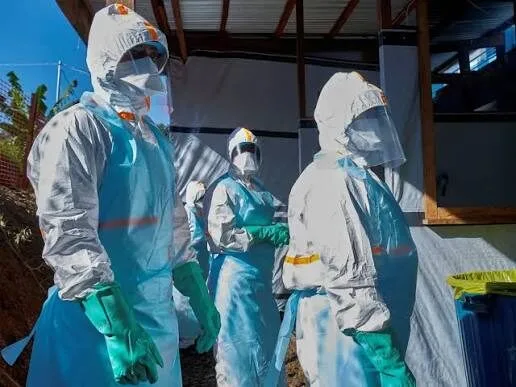
The ministry says it is providing mental health and psychosocial support to quarantined people, returnees, patients, families and health workers, and has strengthened infection prevention in health facilities. It is screening people at points of entry, health facilities and communities, and handling suspected cases under a "7-1-7" approach: detect within seven days, notify within one day and respond within seven days. Travel, trade and public gatherings remain unrestricted.
People with fever, unusual tiredness, muscle or joint pain, sore throat, vomiting, diarrhoea or unexplained bleeding, especially after possible exposure or travel to the Democratic Republic of Congo, are advised to seek medical care and disclose their exposure history.
The outbreak so far
Kenya confirmed its first imported case of Bundibugyo virus disease on 6 October. The ministry says there are nine confirmed cases and two deaths, a case fatality rate of 22.2%. Seven confirmed patients remain in treatment units and, according to Amoth, are stable.
Genomic sequencing of three samples linked the first case to the Bundibugyo virus lineage in the Democratic Republic of Congo. Testing of six other samples is continuing.