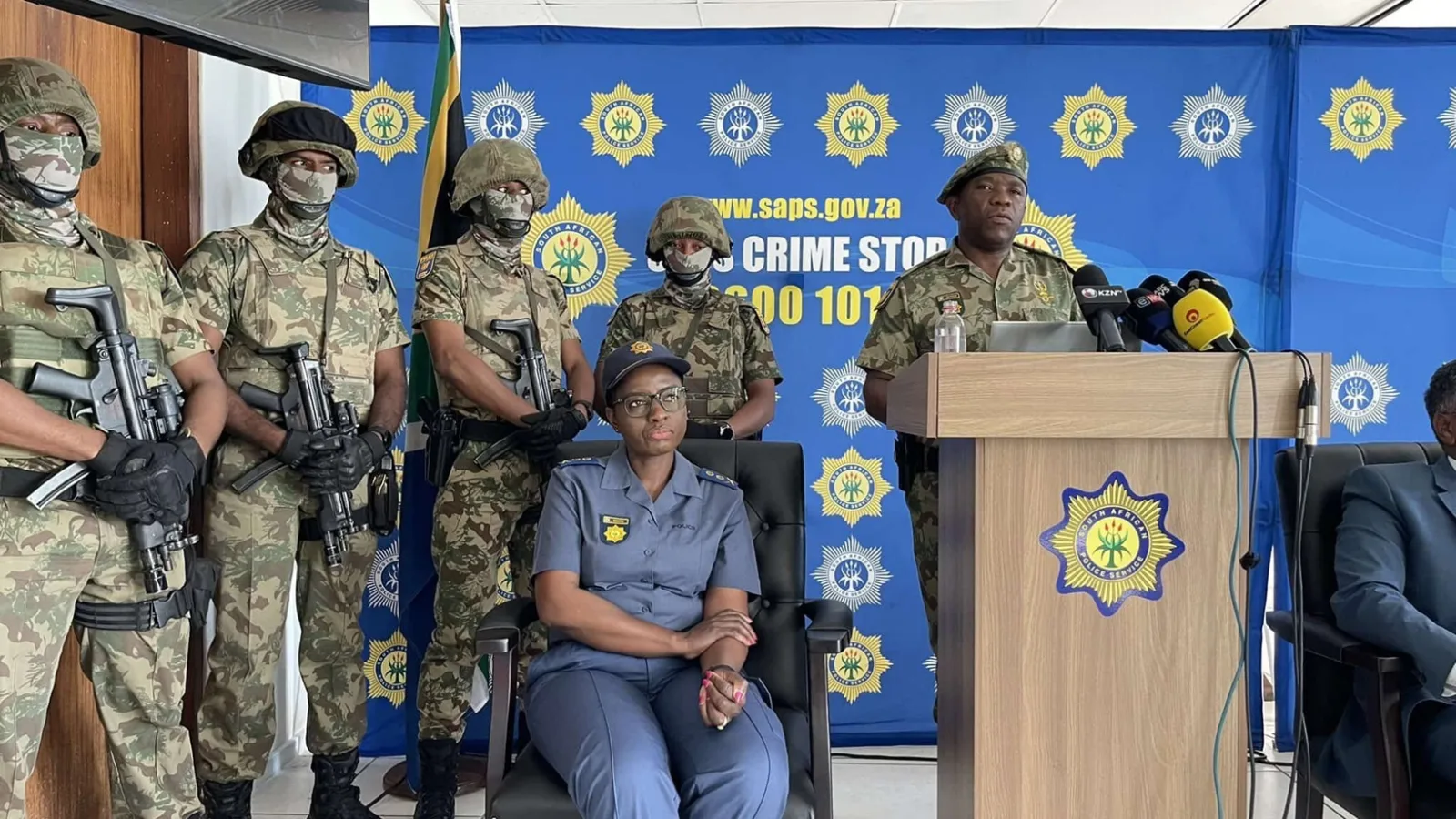
The acting coordinator of the National Intelligence Co-ordinating Committee (Nicoc), Dr Ntandazo Sifolo, told the Madlanga Commission on Thursday that Nicoc members briefed President Cyril Ramaphosa on 30 June 2025, six days before KwaZulu-Natal police commissioner Lt-Gen Nhlanhla Mkhwanazi made his public allegations on 6 July 2025.
Sifolo also described a February 2025 decision by intelligence structures to take control of Gauteng's counter-intelligence work against alleged organised crime. He said that, had nothing been done, "the country was gone". His evidence consists of allegations placed before the commission, which has not made findings on them.
What Sifolo told the commission
Sifolo testified that in February 2025 the intelligence community agreed to tighten co-ordination between Crime Intelligence, Defence Intelligence and the State Security Agency. He said Gauteng counter-intelligence, working with the political killings task team (PKTT), raided the homes of Katiso Molefe and Vusimusi "Cat" Matlala, whom his evidence described as alleged members of a cartel known as the "Big Five".
The group is alleged to be involved in drug trafficking, contract killings, cash-in-transit heists, extortion and tender fraud. These allegations have not been tested in court, and the people named are presumed innocent unless a court finds otherwise.
Sifolo said the alleged cartels influenced suspended police minister Senzo Mchunu to disband the PKTT because they believed it was behind the raids. He also said the head of Crime Intelligence, Lt-Gen Dumisani Khumalo, had effectively given up on the project. The Insight Factor has not independently verified these claims.
The Ramaphosa briefing
Sifolo said Nicoc members met the President on 30 June 2025 to brief him on the arrests of senior Crime Intelligence officials and on criminal networks and state infiltration. "We were given an audience, we met the president, and we briefed the president as a committee," he told the commission.
The briefing was verbal. Sifolo said Minister in the Presidency Khumbudzo Ntshavheni approved it after recusing herself from matters implicating her Cabinet colleagues. His evidence does not establish what action, if any, the President took afterwards.
On Mkhwanazi's 6 July 2025 media briefing, Sifolo said it was deliberate and followed frustration over leaked negative reports and corruption allegations against intelligence structures. "So we decided that let's get South Africans on our side," he said.
Claims about oversight and prosecutors
Sifolo told the commission that Ntshavheni conveyed a request on 11 February 2025 for the Inspector-General of Intelligence to suspend oversight investigations into ongoing operations. He said the Inspector-General declined the request.
He said later intelligence pointed to possible involvement by both the Inspector-General and the Investigating Directorate Against Corruption (Idac) in frustrating efforts to stop organised crime from infiltrating the criminal justice system. These are claims made in evidence. The reports we reviewed do not establish that either body acted improperly, and carry no response from them.
Separately, Sifolo said media freedom must not come at the expense of national security, while arguing that the two should reinforce each other. "The question is not who should be exempted from accountability," he said. He also told the commission that politically motivated killings and intimidation became more pronounced during the 2021 local government elections.
What we do not yet know
- What action, if any, followed the 30 June 2025 briefing.
- How the Inspector-General, Idac, Mchunu and the Presidency respond to the evidence.
- What Sifolo will say in the closed-door part of his testimony, which is to cover classified material.